
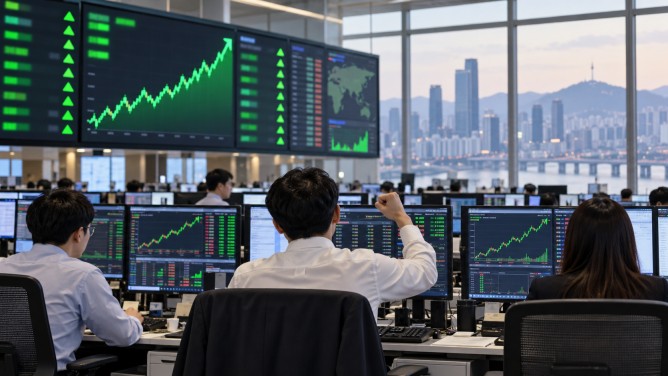
South Korean stocks rallied on Wednesday, rebounding from significant losses in the previous session, as concerns over spending on artificial intelligence (AI) infrastructure eased. The Korea Composite Stock Price Index (KOSPI) surged 3.29%, closing at 5,735.66, driven by a marked increase in semiconductor shares. This upward movement also led to a temporary suspension of program buying by the Korea Exchange after KOSPI 200 futures soared over 5%, a measure last seen two months ago.
Investor confidence was bolstered by stronger-than-expected earnings from Super Micro Computer, a U.S.-based AI server manufacturer. This development alleviated worries about the heavy investment required for AI infrastructure, positively impacting major South Korean tech companies. In response, Samsung Electronics saw its shares climb 5.67% to 223,500 won, while SK hynix experienced a 5.81% rise to 1.29 million won. Additionally, SK Corp., the holding company of SK Group, recovered from previous declines, jumping 12.62% to 482,000 won.
LS Electric also benefited from the improved market sentiment, with its shares increasing by 7.02% to 166,100 won following strong third-quarter earnings supported by the rising demand for power equipment in AI data centers. However, not all sectors experienced gains; defense firm LIG D&A faced a significant setback, plunging 9.03% to 498,500 won after being barred from bidding on defense contracts for two years due to bribery allegations.
Foreign investors played a crucial role in the market’s recovery, purchasing a net 659.96 billion won worth of South Korean shares. The Korean won also strengthened slightly against the U.S. dollar, trading at 1,325.2 won, an increase of 0.8 won from the previous day’s close.
The positive shift in the stock market reflects renewed investor confidence in technology stocks, driven by robust corporate earnings that have helped mitigate concerns about AI infrastructure investments. This broader market recovery highlights the resilience of South Korean stocks amid global economic pressures.