
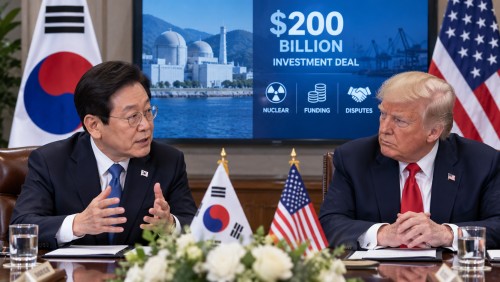
The ongoing negotiations between South Korea and the United States over a $200 billion investment in U.S. nuclear projects face significant hurdles, potentially impacting both countries’ energy strategies and financial commitments. The talks, which aim to finalize a major agreement, have stalled over disagreements concerning nuclear reactor designs, funding timelines, and risk-sharing mechanisms.
A central point of contention is the selection of nuclear reactor technologies. The proposed plan involves constructing eight reactors in the United States, with six based on Westinghouse’s AP1000 design and two incorporating South Korea’s APR1400 technology. However, U.S. officials and Westinghouse have expressed reservations about including the Korean-designed reactors, complicating efforts to finalize the nuclear package. South Korea, for its part, is considering allocating approximately $120 billion to these nuclear-related projects.
Compounding the issue, South Korea is seeking a substantial stake in Westinghouse, which includes voting rights and a board seat. The U.S. company, however, reportedly wishes to restrict South Korea’s ownership to below 10%. This disagreement over corporate involvement further strains the discussions.
Another layer of complexity involves South Korea’s potential role in a U.S. project focused on processing spent nuclear fuel, as well as interest in an Alaska liquefied natural gas initiative. Both projects raise concerns regarding construction costs and long-term financial viability.
Financial arrangements are also a sticking point, with the U.S. reportedly requesting over $9 billion from South Korea by year-end. In contrast, South Korea had initially planned to start with a smaller investment in 2026, increasing contributions in subsequent years. Additionally, the two nations differ on how to calculate investment returns and losses. South Korea proposes using profits from successful projects to offset losses from others, while the U.S. prefers separate calculations for each venture.
Despite these differences, negotiations continue as both governments strive to reach a mutually beneficial agreement. South Korea’s Industry Ministry emphasizes that discussions are ongoing and that the final structure of the investment package remains undecided.