
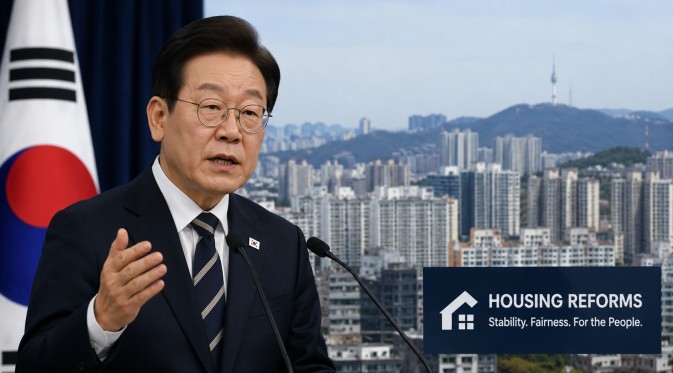
South Korea is poised for significant housing reforms as President Lee Jae Myung announced his commitment to addressing the country’s property market challenges, despite potential political repercussions. In a recent policy forum, Lee underscored the urgency of these reforms, cautioning that without intervention, the nation could face economic stagnation akin to Japan’s post-bubble era.
Key elements of the proposed reforms include raising property holding taxes, revising capital gains taxes, and implementing stricter mortgage lending criteria. These measures aim to curb speculation and bring stability to the housing market. The president emphasized that these actions are crucial to prevent a larger economic crisis from unfolding.
Lee articulated a strategic approach that seeks to protect single-home owners, lower-income households, and residents beyond the capital region. In contrast, the plan proposes heavier tax burdens on individuals with multiple homes and those owning high-value speculative properties. Additionally, the president called for stricter controls on rental-deposit loans, while offering exemptions for vulnerable groups such as young people and newlyweds.
Despite acknowledging the potential political costs, President Lee remains steadfast in his belief that these challenging reforms are necessary for the long-term economic health of South Korea. He argued that the government must prioritize stability over political convenience to avoid an impending economic slowdown.
South Korea is anticipated to reveal a comprehensive real estate policy package later this month or by early August, outlining more detailed measures to address the pressing issues within the housing sector.