
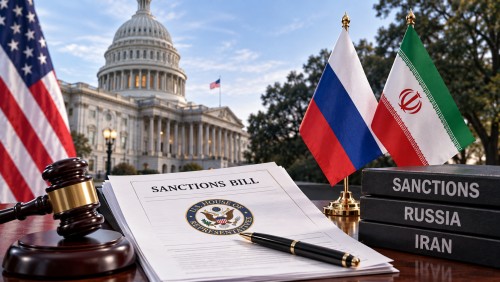
The recent passage of the Lindsey O. Graham Sanctioning Russia and Iran Act of 2026 by the US House of Representatives is set to intensify economic pressure on Russia and Iran, potentially impacting global trade dynamics and energy markets. By targeting Russian officials, financial institutions, and crucial energy sectors, the legislation aims to disrupt operations that support Russia’s ongoing conflict in Ukraine.
Passed by a House vote of 262-159 on September 16, the bill is now awaiting consideration by President Donald Trump. The Senate had already given its approval in August. This legislative move reflects a strategic effort to tighten sanctions on Russia by addressing loopholes, such as the so-called shadow fleet that aids in circumventing existing sanctions.
Additionally, the act proposes imposing tariffs of up to 100% on goods from nations purchasing Russian oil or gas or those facilitating the evasion of these sanctions. This could significantly affect countries reliant on Russian energy exports, prompting them to reconsider their trade relationships.
On the Iranian front, the legislation extends the Iran Sanctions Act through 2031, introducing new measures focused on financial and energy activities linked to Tehran. This continuation and expansion of sanctions underscore the US commitment to limiting Iran’s economic capabilities in the energy sector.
Despite receiving bipartisan support in the House, the bill faced opposition from some lawmakers concerned about the expansion of presidential authority over tariffs and sanctions. These concerns highlight the ongoing debate over the balance of power in US foreign policy and economic sanctions.