
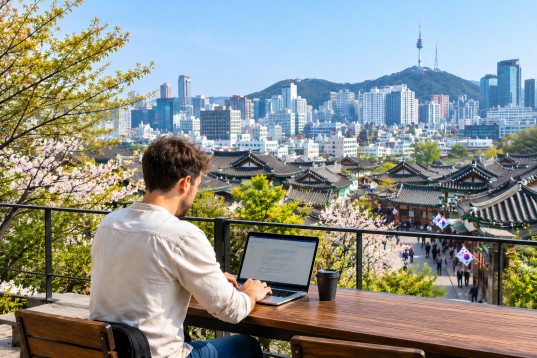
In a move to attract foreign remote workers, South Korea has introduced the Digital Nomad Visa (F-1-D), aiming to facilitate the residence of international professionals in the country while they remain employed by overseas companies. This new visa replaces an earlier pilot program and features relaxed eligibility criteria to draw a broader range of applicants.
Significant changes have been made to the visa’s requirements, notably lowering the income threshold for specific groups. These adjustments primarily benefit younger applicants and those choosing to reside outside the bustling Greater Seoul area, particularly in regions experiencing population decline. Such strategic changes reflect South Korea’s intent to make the visa more accessible and appealing to diverse demographics.
The maximum duration of stay permitted under the Digital Nomad Visa has also been extended, allowing holders to remain in South Korea for up to three years, an increase from the previously allowed two-year limit. This extension is part of the government’s broader strategy to encourage long-term settlement among skilled workers who can contribute to the local economy and community development.
The South Korean government sees this initiative as a way to attract global talent, strengthening the country’s position as a desirable location for highly skilled remote workers. By making it easier for these professionals to settle in South Korea, the government hopes to foster an environment that supports innovation and economic growth.