
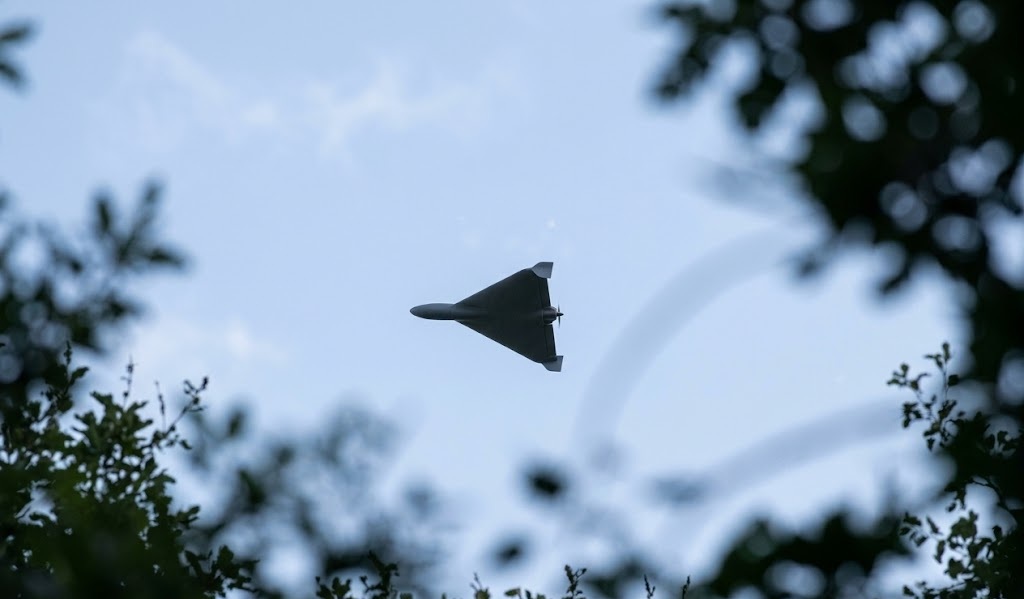
A Russian drone has struck an apartment building in Romania, injuring two people, marking the first recorded instance of a drone tied to the Ukraine conflict directly hitting residential property in a NATO country. The incident occurred in the city of Galați, where a drone, after entering Romanian airspace, crashed into the roof of the building and ignited a fire. Emergency services swiftly put out the fire, while the two injured residents received medical treatment for minor injuries.
Romania’s defense ministry revealed that the drone was detected by radar crossing into Romanian territory during a large-scale Russian offensive targeting areas in Ukraine near the shared river border. In response, Romanian authorities launched F-16 fighter jets upon identifying the drone’s intrusion into their national airspace, underscoring the heightened security measures taken by NATO members in the region.
This incident highlights escalating security concerns for NATO countries situated along Ukraine’s borders, especially as drone and missile activities increasingly encroach upon or near their territories. Romania, alongside Latvia, Estonia, and Poland, has reported several airspace breaches since the onset of the conflict in Ukraine. However, prior incidents predominantly involved debris or drones landing in unpopulated areas, making this strike on a residential building particularly alarming.
The attack comes amid a surge in Russian military actions against Ukraine and renewed threats from Moscow concerning potential military escalation. Ukrainian officials continue to urge for enhanced air-defense support to mitigate the impact of missile and drone strikes, stressing the necessity of bolstered defenses in light of ongoing assaults.
This event is expected to amplify apprehensions within NATO about the security of its borders and the potential for the Ukraine conflict to extend into neighboring alliance territories. As tensions persist, the alliance is likely to reassess and strengthen its defensive measures to guard against further violations and ensure the safety of its member states.