
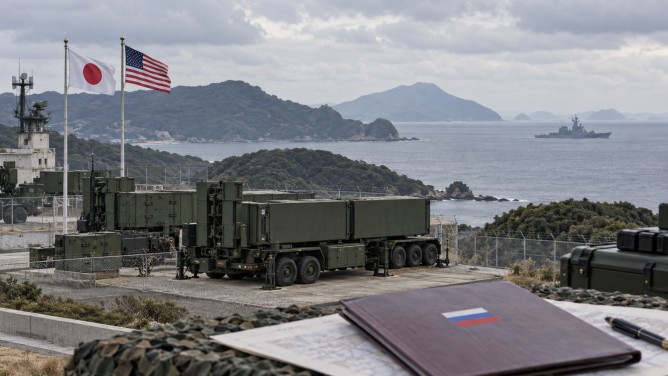
Japan’s decision to deploy US-made Typhon medium-range missile systems on its southern island of Kyushu has sparked a strong protest from Russia, highlighting the potential for increased regional instability. Moscow has expressed concerns that the presence of these missile systems could threaten peace and security in the area, urging Japan to reconsider their deployment.
The protest was formalized through a note from Russia’s Foreign Ministry earlier this month, emphasizing the potential risks associated with the missile systems. Russian Deputy Foreign Minister Andrei Rudenko further conveyed these concerns in a meeting with Japanese Ambassador Akira Muto in Moscow, underscoring the gravity with which Russia views the situation.
This development comes against a backdrop of ongoing tensions between the two nations, which are historically rooted in a territorial dispute over the southern Kuril Islands. These islands, currently under Russian control, are claimed by Japan, and the disagreement has impeded the formal conclusion of a World War II peace treaty between the countries. Russia maintains its firm stance on its sovereignty over the islands, adding another layer of complexity to their diplomatic relations.
The introduction of the Typhon missile systems to Kyushu adds a new dimension to the geopolitical landscape in East Asia. While Japan may view the deployment as a strategic move to bolster its defenses, Russia’s reaction suggests that it is perceived as an escalation that could disrupt the fragile stability of the region. This situation underscores the delicate balance of power in the area and the potential for military developments to have far-reaching diplomatic consequences.